
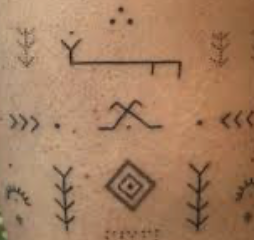
Deq Tattoos
Deq tattoos are traditional Kurdish tattoos that serve as powerful symbols of identity, protection, beauty, and spirituality. They are distinctive among Kurdish women, though some men also have them, typically on arms or hands. The traditional technique involves using a sewing needle to puncture the skin, then applying soot to fill the punctures, which after scabbing leaves dark markings.
How old is the practice of Deq Tattoos?
The practice of Deq tattoos dates back centuries, with some sources tracing it to the Neolithic ages.
For generations, these tattoos have been passed down through families and communities, serving as both cultural markers and protective symbols.
Some artists continue to practice Deq tattoos primarily for cultural preservation. The practice continues so that the knowledge of the tattoos does not disappear with the elders once they have passed away.
Artists like Fatê Temel actively teach the tradition to young people because "People's interest makes me happy. By drawing these motifs, I show this tradition to the next generations"
Many get these tattoos to honour their ancestors and create a bond with their cultural identity.
Best style for Deq Tattoos
For Deq tattoos, the traditional stick-and-poke method remains most authentic. Professional artists use small, thin needles for precision.
The distinctive style features specific motifs like "partridge eyes and stars" with each design carrying symbolic meaning. Some artists are reviving interest by combining traditional Kurdish designs with modern stick-and-poke techniques learned from other indigenous tattoo practices. The focus remains on traditional motifs that have been passed down through generations, ensuring the cultural significance is preserved while adapting to contemporary tattooing methods.
Meaning of Deq Tattoos
Deq tattoos carry deep cultural and symbolic meanings for Kurdish people, serving multiple purposes:
Cultural Identity & Heritage
These tattoos are a powerful symbol of Kurdish identity, helping individuals create bonds with their culture and heritage
Many people get the same deq markings as their mother (dê or dayik), grandmother (pîrik), or great-grandparents have, maintaining family traditions
They represent a collective desire to reclaim this almost-vanished tradition as a form of self-identification
Spiritual & Protective Functions
Historically, deq tattoos have been associated with old belief systems including paganism, shamanism, and Zoroastrianism
They serve as protective symbols, believed to ward off evil spirits and bring good fortune
The tattoos act as spiritual guardians for the wearer
Social & Life Milestone Markers
Traditionally applied when girls were around 10 years old, marking their transition to womanhood
Some contemporary women get temporary facial deq markings for special occasions like weddings
They represent beauty, social status, and community belonging
Specific Motif Meanings Each traditional design carries specific symbolic meaning:
Partridge eyes and stars: Common protective motifs
Geometric patterns: Often represent family lineage and tribal affiliations
Floral designs: Symbolize beauty and natural elements
Animals: Various animal motifs carry different protective and symbolic meanings
The practice reflects centuries of Kurdish cultural history, with each tattoo serving as both personal expression and cultural preservation . Each motif has a meaning making deq tattoos a sophisticated visual language of Kurdish heritage.