
Mongolian Tattoos
Mongolian tattooing is a tradition where the ancient roots are thinner than you might expect, and the modern revival is the more interesting story.
Historically, Mongolian nomadic culture did not develop the deep, continuous tattoo lineage that Thailand, the Philippines or Japan did: much of what we associate with Mongolia, Tengrism, shamanism, the horse-based steppe culture, expressed the sacred through other means, like khadag (ceremonial blue silk scarves), ovoo cairns and tamga (clan livestock brands). There are a few historical threads, though: ancient tattoos have been found on steppe burials (the most famous being the Siberian Pazyryk mummies, whose animal-style tattoos are cousins to Mongolian steppe art), and various motifs, protective marks, script inscriptions, appear sporadically in folk practice. What exists today as "Mongolian tattoo" is largely a modern style built deliberately on those older symbols.
Types of Mongolian-style tattoos
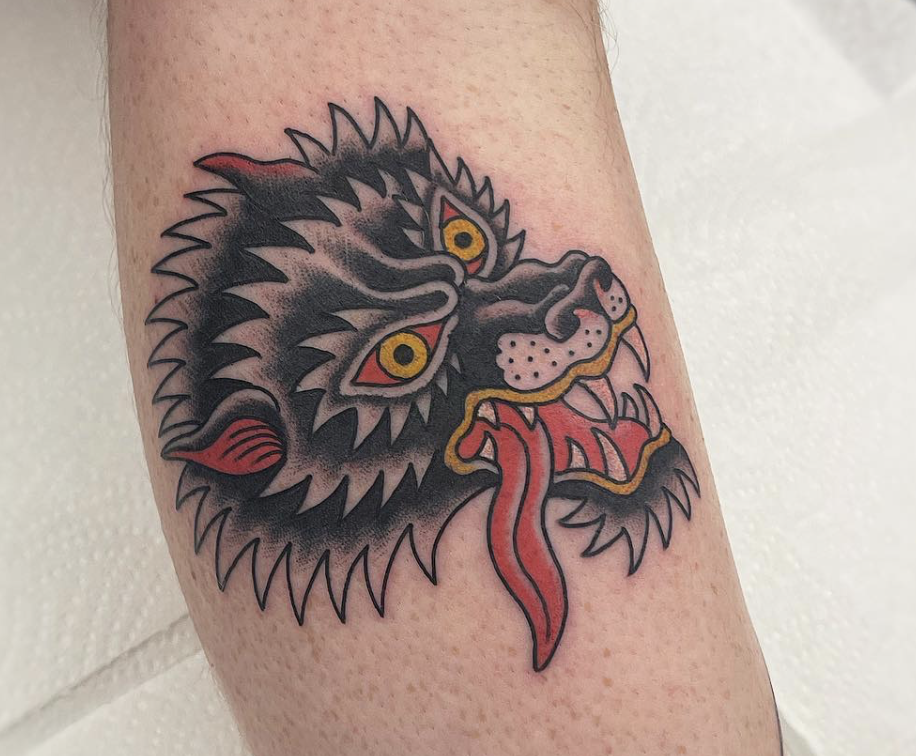
The most common motifs are these. The Soyombo, the national symbol with its fire, sun, moon and the two vertical bars, is the single most requested Mongolian tattoo, often small on the forearm, wrist or chest; it represents fire, continuity of the nation and the eternal rising of the people. Vertical Mongolian script (bichig, the beautiful flowing traditional alphabet) is popular as a band or column of text, usually spelling a name, a proverb or a phrase like "eternal blue sky." The wolf and the mare or stallion carry the deepest mythological weight: the wolf is the ancestor of the Mongol people in the founding legend, and the horse is the soul of steppe life, freedom, movement and partnership. The eagle and the falcon (shared with the Kazakh eagle hunters of western Mongolia), the deer stone motifs, the animal-style scrolling figures copied from ancient steppe petroglyphs and the Pazyryk tattoos, and the endless knot and hasag symbols from the Buddhist layer of Mongolian culture all appear frequently. Larger compositions often feature a Mongol warrior or archer, Genghis Khan imagery (which carries political weight in Mongolia itself, so it's worth knowing what you're wearing), or landscape pieces with the steppe, gers and horses.
Meaning of the tattoos:
The core of Mongolian symbolism is Tengrism, the old steppe belief in the Eternal Blue Sky (Tengri) and the sacredness of land, sky and ancestors. So the wolf means ancestry, loyalty and resilience; the horse means freedom and the bond between person and nature; the Soyombo means continuity, independence and protection; fire motifs mean renewal and the hearth; script tattoos usually carry a value or a name the wearer wants held permanently. Compared to the traditions we talked about earlier, Sak Yant or batok, Mongolian tattooing is less about a practitioner conferring a mark and more about the wearer declaring a connection: to ancestors, to the steppe, to a philosophy of endurance and freedom under an open sky.
Placement for Mongolian Tattoos:
The Soyombo sits naturally on the forearm, inner wrist, chest over the heart, or the back of the shoulder; script columns suit the forearm, spine and side ribs; animal pieces, wolves, horses, eagles, are usually composed as shoulder caps, upper arms, calves and back pieces, because the bold blackwork style wants large flat or muscular ground. Warriors and full scenes almost always belong on the back, chest or full sleeve. One cultural note: Mongolian symbols are shared cultural heritage rather than closed clan marks in the way Chin facial tattoos are, so outsiders wearing them isn't the delicate question it is elsewhere, but the Mongolian public has had lively debates about foreigners and even ethnic minorities using national symbols flippantly, so learning the meaning of your specific design is still the respect that matters. If you can, go to a Mongolian or Mongolian-trained artist, there's a small but strong scene in Ulaanbaatar, because they know the script direction, the exact Soyombo geometry and the stories behind the motifs, all of which a generalist studio can easily get wrong.
You may also like…
-
![Your first tattoo]()
Your First Tattoo
Considering your first tattoo? Hear from those recently in the same position to help guide your decision or put any fears at ease.
-
![Constellation tattoo]()
My Tattoo Healing Experience
Learn from one of our valued customers on how they navigated an effective healing experience.
-
![Eagle tattoo]()
Tattoo Styles
Explore all the different types of tattoo to find the perfect style for you.


