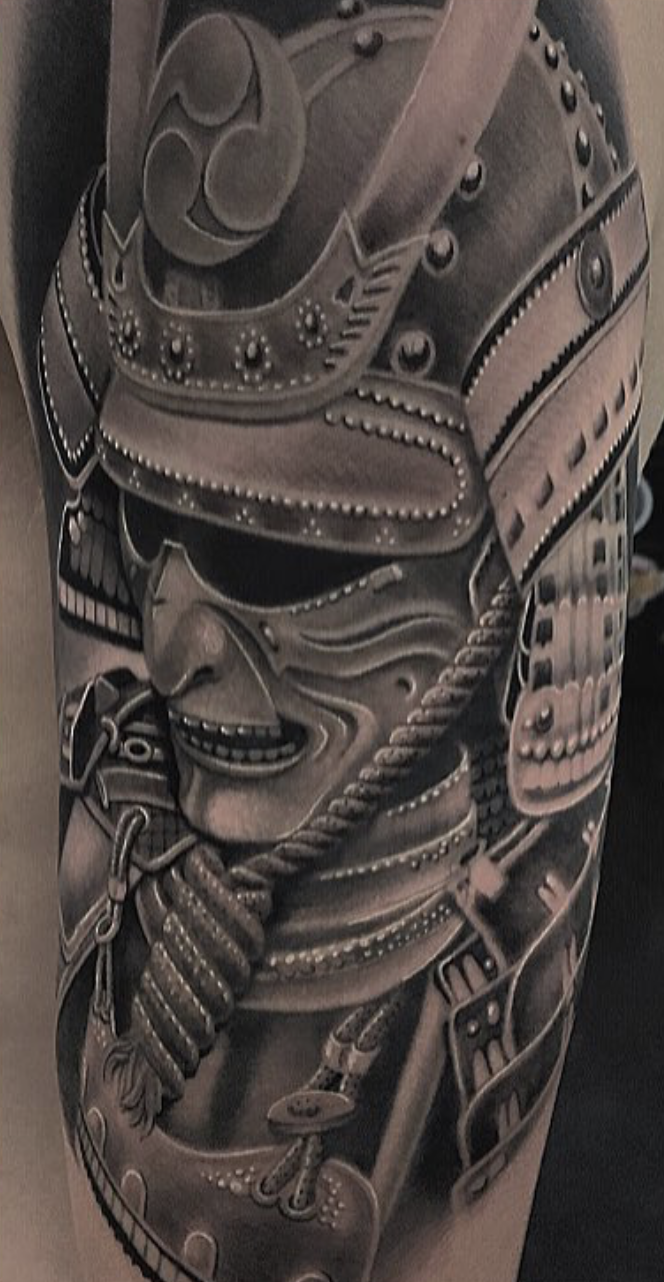
Samurai Tattoos
Samurai tattoos (also known as bushi or warrior tattoos) feature imagery depicting the legendary Japanese warriors who served the nobility from the 12th to 19th centuries. These tattoos typically include samurai warriors, their weapons, armor, helmets, traditional symbols, and scenes from their legendary lives.
Meaning and Symbolism
Core Values and Virtues:
Honor and Integrity (Bushido): The samurai code of conduct emphasizing moral character
Loyalty and Devotion: Unwavering commitment to one's lord and principles
Courage and Bravery: Facing adversity without fear
Discipline and Self-Control: Mastery over one's emotions and actions
Respect and Humility: Treating others with dignity regardless of status
Protection and Strength:
Guardianship: Samurai as protectors of the innocent
Inner Strength: Overcoming personal challenges and obstacles
Resilience: Enduring hardship with dignity
Focus and Determination: Achieving goals through unwavering commitment
Cultural Heritage:
Japanese Identity: Connection to traditional Japanese culture and history
Warrior Spirit: Embracing the philosophy of the martial way
Balance: Harmony between strength and compassion, action and reflection
Best Tattoo Styles for Samurai Tattoos
Japanese Traditional (Irezumi):
Why it's perfect: The most authentic and culturally appropriate style
Characteristics: Bold black outlines, vibrant colors (red, black, green, yellow), heavy shading, flat areas of color
Best for: Full sleeves, back pieces, large chest tattoos
Key elements: Traditional wave patterns, cloud motifs, cherry blossoms
Neo-Traditional:
Why it's great: Modern twist on traditional Japanese style
Characteristics: More detailed than traditional, expanded color palette, realistic shading
Best for: Medium to large pieces wanting more depth and dimension
Advantage: Combines traditional elements with contemporary techniques
Black and Gray Realism:
Why it works: Creates dramatic, powerful portraits of samurai warriors
Characteristics: Photorealistic shading, subtle gray tones, dramatic lighting
Best for: Samurai portraits, detailed armor pieces, dramatic scenes
Placement: Works well on arms, chest, back
Watercolor:
Why it's unique: Creates a softer, more ethereal interpretation
Characteristics: Soft edges, bleeding colors, painterly effects
Best for: Smaller pieces, samurai elements mixed with other styles
Mood: More dreamlike and less aggressive
Geometric:
Why it's modern: Combines traditional imagery with contemporary design
Characteristics: Clean lines, mathematical patterns, symmetrical designs
Best for: Modern interpretations, minimalist samurai elements
Popular elements: Geometric samurai helmets, weapon patterns
Dotwork:
Why it's distinctive: Creates texture and depth through dots
Characteristics: Shading created with dots, intricate patterns, unique texture
Best for: Detailed samurai armor, traditional patterns
Effect: Subtle yet detailed appearance
Popular Samurai Tattoo Elements
Warrior Figures:
Full samurai portraits in battle stance or contemplative pose
Samurai with swords (katana, wakizashi)
Samurai in traditional armor with helmets
Weapons and Armor:
Katana (samurai sword) with detailed fittings
Tsuba (sword guard) patterns
Samurai helmets (kabuto) with crests
Armor pieces (yoroi, do)
Traditional Motifs:
Cherry blossoms (transience and beauty)
Waves (strength and resilience)
Koi fish (perseverance and determination)
Dragons (power and wisdom)
Tigers (courage and protection)
Calligraphy:
Japanese kanji for virtues like "honor," "courage," "loyalty"
Samurai quotes or phrases from the Bushido code
Placement Considerations
Large Scale:
Back (ideal for full traditional sleeves)
Chest (for samurai portraits)
Thigh (for detailed scenes)
Full sleeves
Medium Scale:
Forearm (for samurai portraits or weapon elements)
Upper arm (for armor pieces)
Chest/rib area (for vertical samurai scenes)
Small Scale:
Wrist (small samurai symbols)
Shoulder (helmet or weapon elements)
Back of neck (minimalist designs)
When choosing a samurai tattoo, consider both the cultural significance and personal meaning you want to convey. Working with an experienced artist who understands Japanese tattoo traditions is crucial for an authentic and respectful representation.
Samurai Tattoo Specialists
-
![A man with short dark hair and blue eyes standing in front of a yellow brick wall.]()
Nic Hald-Jacobsson
-
![Portrait of a young man with dark styled hair, blue eyes, and a tattoo on his neck, smiling and looking to the side, with a brick wall in the background.]()
Matt Stopps
-
![A woman with curly black and blonde hair, wearing a black top, against a yellow brick wall.]()
Claudia Trash
-
![A person with glasses and a shaved head smiling and laughing, wearing a dark hoodie in front of a brick wall.]()
Nick Jagla
-
![A man with a full beard and mustache wearing a black beanie and a black jacket, looking thoughtfully to the side, with artwork in the background.]()
Fredy Ricca
-
![A man with tattoos on his neck, wearing a black beanie and beige jacket, standing in front of a brick wall.]()
Joe Macigno